
- Blue Screen Mayhem caused widespread system instability across Windows environments.
- CrowdStrike’s Glitch created security blind spots during outage and recovery phases.
- Blue Screen of Death (BSOD) incidents weakened defenses, increasing attacker opportunities.
- Operational failures can amplify threat actor activity if not managed securely.
Introduction
A polymorphic Malware designed to evade detection while stealing sensitive information from infected systems. Similar in behavior and intent to WASP Stealer, Discock Stealer leverages obfuscation and frequent code changes to bypass signature-based defenses. The article focuses on its behavior, delivery mechanisms, and why such polymorphic stealers pose a growing challenge for modern security detection.
In the ever-evolving landscape of cybersecurity, even the smallest hiccup can create ripples that turn into tsunamis. The recent Blue Screen of Death (BSOD) outage at Microsoft, caused by a compatibility issue with CrowdStrike, was just such an event. But as we've learned time and time again, where there's chaos, there are opportunists waiting to pounce.
As if managing a major outage wasn't challenging enough, three separate malware campaigns surfaced, exploiting this catastrophe through phishing websites and emails. Apart from these, various CrowdStrike domains have been created for malicious intent; a list of a few domains can be found in the end section.
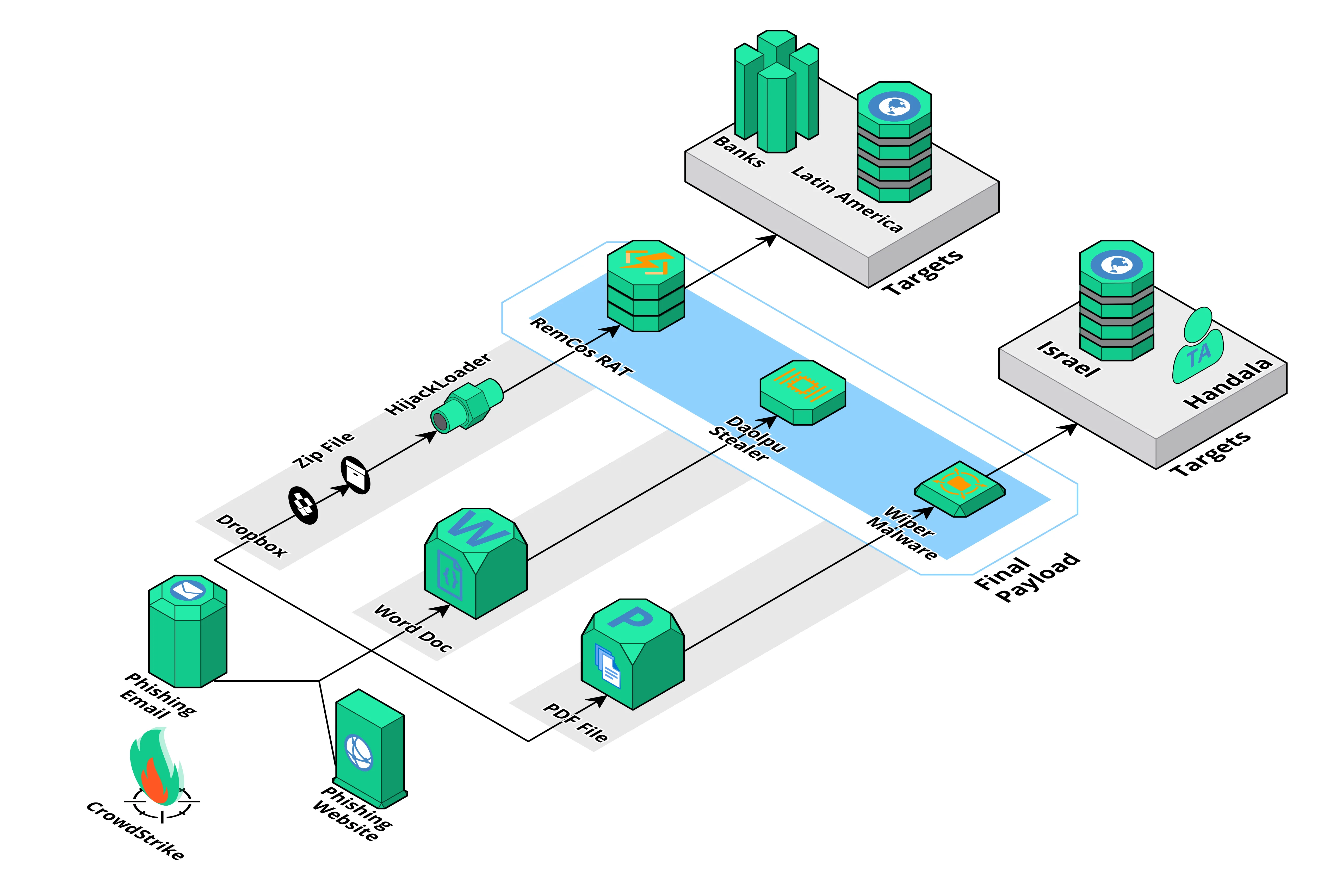
Campaign 1: Fake Updates with RemCos RAT
One concerning strategy involved the distribution of misleading updates. Threat actors circulated ZIP files named "crowdstrike-hotfix.zip," ostensibly offering a solution to the BSOD problem. However, these files actually contained the RemCos Remote Access Trojan (RAT), which enables unauthorized remote access to affected systems, potentially leading to data breaches.
In one instance, a phishing website impersonating BBVA bank was used to distribute this malicious ZIP file. When downloaded and run, the file activated HijackLoader, which subsequently installed the RemCos RAT. This case demonstrates how attackers took advantage of the situation to compromise systems by posing as providers of crucial updates.
For intel on the RemCos RAT and HijackLoader, visit Loginsoft's threat profiles:
Campaign 2: Daolpu Stealer via Fake Microsoft Recovery Manual
The threat actors behind the Daolpu Stealer delivered the malware via a Word document containing a malicious macro, disguised as a recovery manual. Once the Daolpu Stealer was executed, the following behavior was observed:
- Termination of the Chrome process.
- Collection of credentials from Chrome and Mozilla browsers.
- Exfiltration of data to the command-and-control (C2) server.
Sample: Triage
For more information about the Daolpu Stealer, visit: Daolpu Malware Campaign
Campaign 3: The Handala Hacking Hullabaloo
The Handala hacking group utilized the outage to further their political agenda. They claimed to have conducted a wiper malware attack targeting Israeli organizations, disguising it as a CrowdStrike update. This malware was designed to not only disrupt systems but also to permanently delete data, potentially causing significant damage.
This incident illustrates how certain groups may exploit widespread technical issues to carry out targeted attacks, combining cybersecurity threats with political motivations.
Threat Bites
Malicious Domains:
crowdstrike-bsod[.]co
crowdstrike-bsod[.]com
crowdstrike-fix[.]zip
crowdstrike-helpdesk[.]com
crowdstrike-out[.]com
crowdstrike[.]blue
crowdstrike[.]bot
crowdstrike[.]cam
crowdstrike[.]ee
crowdstrike[.]es
crowdstrike[.]fail
crowdstrike0day[.]com
crowdstrikebluescreen[.]com
crowdstrikebsod[.]co
crowdstrikebsod[.]com
crowdstrikebug[.]com
crowdstrikeclaim[.]com
crowdstrikeclaims[.]com
Conclusion
The blog highlights that Blue Screen Mayhem was not just an availability issue but a security concern amplified by scale and timing. CrowdStrike’s Glitch demonstrated how outages can disrupt defensive controls and open windows of opportunity for attackers, especially during emergency response and remediation. The incident reinforces the need for resilient security architectures, controlled recovery processes, and contingency planning that accounts for both operational and adversarial risks during major system failures.
FAQs
Q1. What is meant by Blue Screen Mayhem?
Blue Screen Mayhem is an informal phrase used to describe large-scale disruption caused when many systems simultaneously crash with the Blue Screen of Death (BSOD). The term became widely used after the global IT outage in July 2024, when a faulty update from CrowdStrike triggered BSODs on millions of Windows devices worldwide. The “mayhem” reflects the massive impact disrupting airlines, banks, hospitals, and businesses across the globe due to widespread system failures.
Q2. How did CrowdStrike’s glitch become a security risk?
CrowdStrike’s 2024 incident became a major security risk not because of a cyberattack, but due to a flawed update in its Falcon endpoint protection software that triggered widespread Windows Blue Screen of Death (BSOD) crashes. The outage caused massive operational disruption and financial losses, while also creating opportunities for attackers to spread fake fixes and malware during the chaos. A simple logic error in a routine update turned a trusted security tool into a single point of failure highlighting the critical risks of vendor dependency and insufficient update validation.
Q3. Why are BSOD incidents dangerous beyond downtime?
Beyond immediate downtime, Blue Screen of Death (BSOD) incidents are dangerous because they can cause data corruption or loss, signal deeper problems like malware infections or hardware failures, and trigger cascading operational outages across large organizations.
Q4. How can outages become a threat actor’s playground?
Outages create a “playground” for attackers by causing chaos, distraction, and urgency. During these moments, security best practices are often overlooked, exposing new vulnerabilities and making organizations and users more vulnerable to opportunistic attacks.
Table of Contents

Patched Months Ago, Exploited Today: This Week’s KEV Listings and the Malware Behind Them
Patched Months Ago, Exploited Today: This Week’s KEV Listings and the Malware Behind Them
Explore the key security, speed, and performance differences between TLS 1.3 and TLS 1.2
Ready to Find and Fix Your Security Weak Points?
LoginSoft's cybersecurity experts help organizations conduct thorough gap analyses, build prioritized remediation roadmaps, and achieve measurable security maturity improvements.
Schedule a Security Assessment
Hari Charan
Director of Security Research & Threat Intelligence
A MESSAGE FROM OUR TECHNOLOGY LEADER
The NVD enrichment cutback is not a surprise to us - it’s the inflection point we’ve been preparing for. At Loginsoft, we’ve spent years building the research depth and tooling infrastructure to independently enrich vulnerabilities at scale, with the accuracy and context modern security programs require. LOVI is our answer. Our mission is simple: ensure that no CVE relevant to your environment goes unanalyzed, unscored, or unactioned - regardless of what remains in NIST’s queue.
Key Takeaways
- Standard audit tools do not detect intentionally malicious packages. Tools like npm audit and pip-audit focus on known vulnerabilities, not malware behavior. A newly published malicious package with no CVE or advisory can pass these checks undetected.
- The attack surface is trust, not just code. Typosquatting, dependency confusion, and malicious updates exploit package-manager resolution and implicit trust. Developers and CI pipelines may install packages without verifying their provenance or behavior.
- Registry controls are only one layer of defense. Registry scanning, malware detection, and maintainer 2FA reduce risk, but attackers exploit gaps between these controls. Effective protection combines behavioral analysis, dependency pinning, SBOM governance, and build-environment isolation.
Stay Ahead
Get the Latest Cybersecurity Insights
Security research, threat intelligence, vulnerability updates, product news, and expert insights, delivered directly to your inbox. Stay informed. Stay secure.

BLOGS AND RESOURCES
Latest Articles
By using this website, you agree to the storing of cookies on your device to enhance site navigation, analyze site usage, and assist in our marketing efforts. View our Privacy Policy for more information.
Accept





© Copyright 2026, All Rights Reserved by Loginsoft
Privacy policy