
- Elastic integration enriches security data with external internet threat intelligence.
- Improved correlation enhances detection of accuracy across logs and events.
- Centralized visibility in Elastic supports faster investigation and analysis.
- Threat intelligence becomes actionable through search, analytics, and dashboards.
Introduction
Elastic Stack strengthens security monitoring and analysis. By ingesting external intelligence into Elastic, organizations can enrich logs, correlate events more effectively, and gain deeper visibility into malicious activity. The focus is on using Elastic’s search, analytics, and visualization capabilities to operationalize threat intelligence and improve detection and response workflows.
In today's cybersecurity landscape, staying ahead of emerging threats is paramount. One key aspect of this proactive approach is the integration of data/tools that can swiftly identify and mitigate risks. Enter leading Internet intelligence provider’s Elastic integration, a powerful solution that empowers organizations to monitor and respond to high-risk domains effectively.
Understanding leading Elastic Integration
The Elastic integration functions by tapping into Domain Hotlist, which contains a curated list of active, high-risk domains. This integration is designed to streamline the process ofaccessing and leveraging this critical data within Elastic environments.
How It Works
- Data Collection: The integration automatically collects the list of active, high-risk domains from leading Internet intelligence provider’s Domain hotlists, ensuring that the most relevant threat intelligence is readily available.
- User Control: Elastic customers have the flexibility to define custom rules for querying the active high-risk domains data feed. This granular control allows organizations to tailor their threat detection strategies according to their specific needs and risk profiles.
Key Benefits
- Proactive Threat Detection: By leveraging leading Internet intelligence company’s rich threat intelligence data within Elastic, organizations can proactively detect and respond to potential security threats before they escalate.
- Customizable Rules: The ability to write custom rules empowers Elastic customers to fine-tune their threat detection mechanisms, ensuring that the focus remains on the most critical risks.
- Efficient Incident Response: With actionable data at their fingertips, security teams can swiftly raise and investigate incidents related to active high-risk domains, enabling timely and effective response strategies.
Conclusion
The leading Internet intelligence company’s Elastic integration represents a significant step forward in bolstering cybersecurity defenses. By seamlessly integrating threat intelligence into Elastic environments and offering customizable rules for threat detection, organizations can enhance their ability to identify and mitigate security risks effectively.
In an ever-evolving threat landscape, proactive measures such as this integration are essential for staying resilient against emerging cyber threats. Embracing innovative solutions like leading Internet intelligence company’s Elastic integration equips organizations with the tools they need to safeguard their digital assets and maintain a robust security posture.
FAQs
Q1. Why integrate threat intelligence with Elastic?
Integrating threat intelligence (TI) with Elastic Security enriches security data with real-world threat context and automates the detection of known attacks. By normalizing indicators like IPs, domains, and IOCs into the Elastic Common Schema (ECS), it enables real-time correlation, faster incident response, and quicker remediation. This automation reduces analyst workload, supporting tasks like investigation and reporting while delivering a unified, proactive defense against evolving threats.
Q2. What type of intelligence is integrated into Elastic?
Integrations in Elastic Security deliver tactical Cyber Threat Intelligence (CTI). This intelligence feeds Elastic’s SIEM and XDR capabilities, helping security teams quickly detect, investigate, and respond to known threats with greater accuracy and speed.
Q3. How does Elastic improve security analysis?
Elastic Security improves security analysis by unifying SIEM, XDR, and cloud security into a single platform powered by scalable data analytics and AI-driven insights. This enables security teams to detect threats earlier, investigate incidents faster, and respond more efficiently across the entire environment.
Q4. Does this integration help with incident investigation?
Yes. Enriched data and advanced analytics help investigators quickly identify suspicious activity and assess impact.
Q5. Is Elastic suitable for large-scale security monitoring?
Yes. Elastic is designed to handle large data volumes and support scalable security analytics and monitoring.
Table of Contents
Eight KEV Additions and a Third APT: Enterprise Infrastructure Tested on Every Front
Eight KEV Additions and a Third APT: Enterprise Infrastructure Tested on Every Front
Explore the key security, speed, and performance differences between TLS 1.3 and TLS 1.2
Ready to Find and Fix Your Security Weak Points?
LoginSoft's cybersecurity experts help organizations conduct thorough gap analyses, build prioritized remediation roadmaps, and achieve measurable security maturity improvements.
Schedule a Security Assessment
Hari Charan
Director of Security Research & Threat Intelligence
A MESSAGE FROM OUR TECHNOLOGY LEADER
The NVD enrichment cutback is not a surprise to us - it’s the inflection point we’ve been preparing for. At Loginsoft, we’ve spent years building the research depth and tooling infrastructure to independently enrich vulnerabilities at scale, with the accuracy and context modern security programs require. LOVI is our answer. Our mission is simple: ensure that no CVE relevant to your environment goes unanalyzed, unscored, or unactioned - regardless of what remains in NIST’s queue.
Key Takeaways
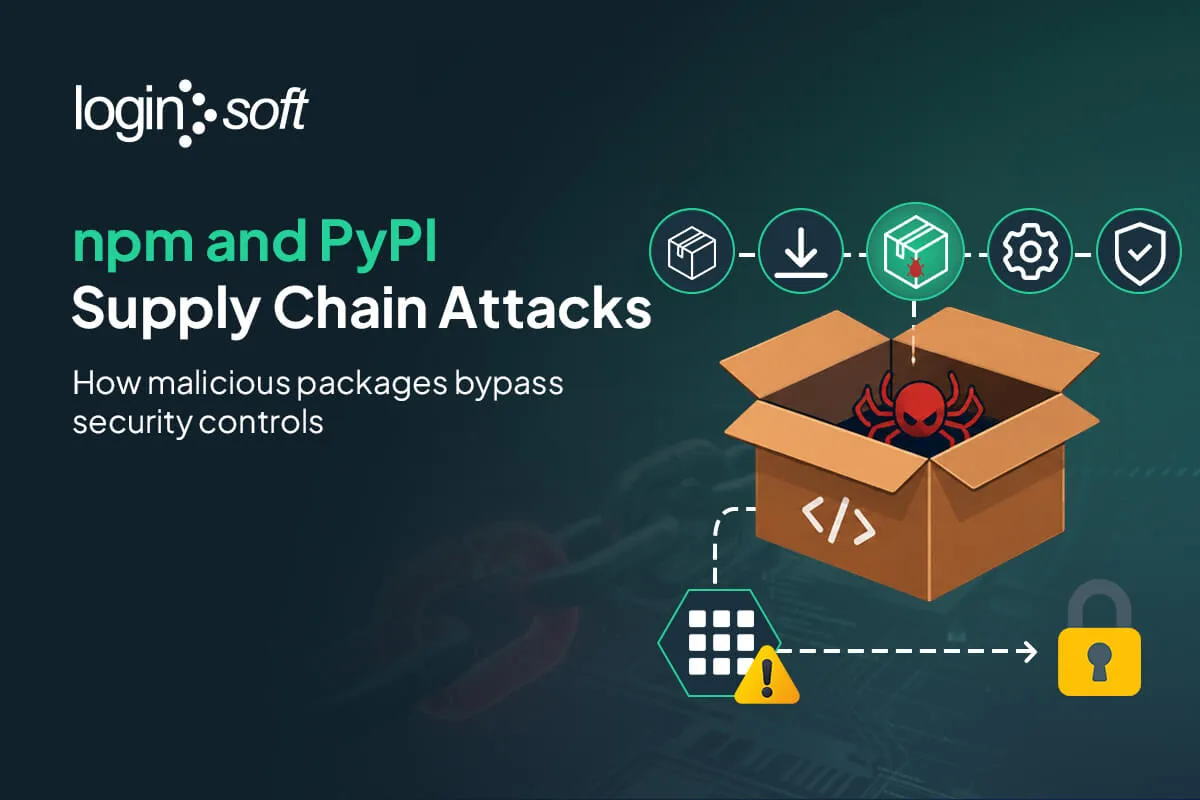
- Standard audit tools do not detect intentionally malicious packages. Tools like npm audit and pip-audit focus on known vulnerabilities, not malware behavior. A newly published malicious package with no CVE or advisory can pass these checks undetected.
- The attack surface is trust, not just code. Typosquatting, dependency confusion, and malicious updates exploit package-manager resolution and implicit trust. Developers and CI pipelines may install packages without verifying their provenance or behavior.
- Registry controls are only one layer of defense. Registry scanning, malware detection, and maintainer 2FA reduce risk, but attackers exploit gaps between these controls. Effective protection combines behavioral analysis, dependency pinning, SBOM governance, and build-environment isolation.
Stay Ahead
Get the Latest Cybersecurity Insights
Security research, threat intelligence, vulnerability updates, product news, and expert insights, delivered directly to your inbox. Stay informed. Stay secure.

BLOGS AND RESOURCES
Latest Articles

By using this website, you agree to the storing of cookies on your device to enhance site navigation, analyze site usage, and assist in our marketing efforts. View our Privacy Policy for more information.
Accept


© Copyright 2026, All Rights Reserved by Loginsoft
Privacy policy