
Data Breach in Cybersecurity
Data Breach in Cybersecurity
What Is Data Breach
A data breach is the release of confidential, private, or otherwise sensitive information into an unsecured environment. A data breach can occur accidentally, or as the result of a deliberate attack.
Millions of people are affected by data breaches every year, and they can range in scope from a doctor accidentally looking at the wrong patient’s chart, to a large-scale attempt to access government computers to uncover sensitive information.
How Do Data Breaches Happen?
A data breach can be caused by an outside attacker, who targets an organization or several organizations for specific types of data, or by people within an organization. Hackers select specific individuals with targeted cyberattacks.
Data breaches can be the result of a deliberate attack, an unintentional error or oversight by an employee, or flaws and vulnerabilities in an organization’s infrastructure.
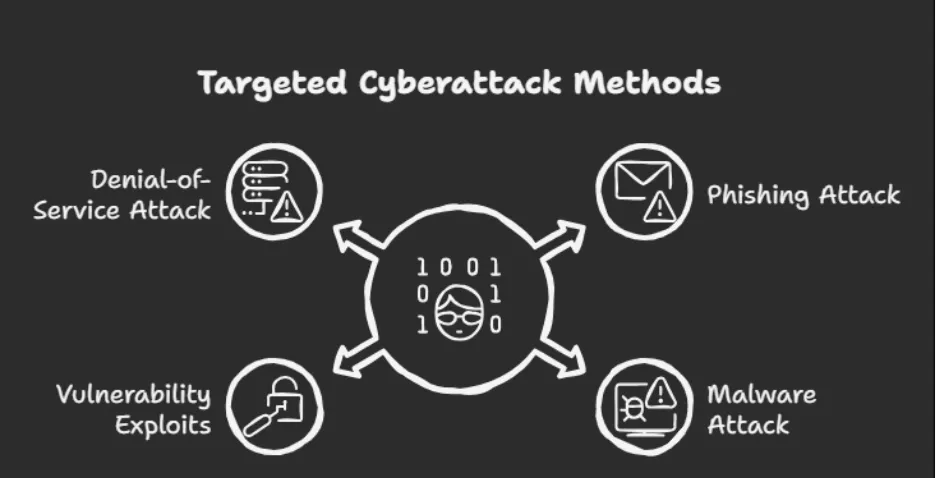
Here are common ways data breaches occur:
- Targeted Attack
A targeted attack is a deliberate cyberattack in which an individual, organization, or specific group is intentionally singled out to steal sensitive or confidential information. Instead of launching broad, opportunistic attacks, cybercriminals carefully plan these attacks using tailored techniques to gain unauthorized access to systems, networks, or user credentials.
Attackers often rely on a combination of social engineering, technical exploits, and malicious tools to bypass security controls. Common types of targeted attacks that can lead to data breaches include:
- Phishing Attacks
Phishing attacks use social engineering tactics to deceive victims into revealing sensitive information such as login credentials, financial details, or personal data. These attacks commonly appear as emails or SMS messages impersonating trusted individuals or organizations, directing victims to malicious links or fake websites.
- Malware Attacks
A malware attack occurs when an attacker persuades a target to open a malicious attachment, click a harmful link, or visit a compromised website. Once executed, the malware is installed on the victim’s device and can be used to steal credentials, monitor activity, or provide ongoing access to attackers.
- Vulnerability Exploits
In this type of attack, cybercriminals exploit weaknesses in software or hardware systems. Often referred to as zero-day attacks, these exploits are launched before the organization becomes aware of the vulnerability or applies a security patch, allowing attackers to gain unauthorized access.
- Denial-of-Service (DoS) Attacks
A DoS attack is designed to disrupt normal operations by overwhelming a network, application, or website with excessive traffic or fake requests. This prevents legitimate users from accessing services and can cause system crashes or downtime. When multiple compromised devices are used simultaneously, the attack becomes a Distributed Denial-of-Service (DDoS) attack.
Common Targets in Data Breaches
Financial motivation is the primary driver behind most data breaches. While no organization or individual is immune, certain industries are targeted more frequently due to the type and volume of data they manage. These often include government, healthcare, education, energy, and commercial enterprises.
Organizations with weak security controls are especially vulnerable. Common risk factors include unpatched systems, poor password hygiene, employees susceptible to phishing, compromised credentials, and lack of email or data encryption.
Attackers most often seek the following types of data:
- Personally Identifiable Information (PII)
Data that can identify an individual, such as names, dates of birth, phone numbers, email addresses, home addresses, and government-issued identification numbers.
- Protected Health Information (PHI)
Medical and health-related records that identify patients and describe their health conditions, treatments, insurance details, and associated personal information.
- Intellectual Property (IP)
Valuable intangible assets such as trade secrets, proprietary software, patents, trademarks, designs, creative works, and digital assets.
- Financial and payment information
Credit and debit card details, transaction histories, payment records, and other financial data tied to individuals or organizations.
- Business-critical data
Information essential to business operations and compliance, including source code, strategic plans, merger and acquisition documents, and regulated records.
- Operational data
Data that supports daily operations, such as financial reports, legal files, invoices, sales data, batch processing files, and internal IT documentation.
Identifying and Responding to Data Breaches
Early detection and rapid response are crucial to limiting the damage caused by a data breach. Delays can significantly increase financial, legal, and reputational harm. A structured incident response process helps organizations act quickly and decisively.
The response typically involves the following seven phases:
1. Identify the Breach
Initial indicators may include vulnerability alerts, abnormal network behavior, suspicious login attempts, phishing emails, or external breach notifications. Breaches can also originate internally, such as when departing employees steal data.
2. Take Immediate Action
Record the exact time and date of discovery. Notify internal security and leadership teams, and immediately restrict access to affected systems or data.
3. Preserve Evidence
Interview those who discovered the incident, review security logs and monitoring tools, and track data movement across applications, servers, devices, and cloud services.
4. Analyze the Incident
Determine how the breach occurred by examining traffic patterns, access logs, affected systems, duration of exposure, and the data involved.
5. Contain, Secure, and Recover
Limit further access to compromised resources, protect evidence from alteration or deletion, and begin restoring affected systems to a secure state.
6. Notify Required Parties
Inform relevant stakeholders, regulatory bodies, and law enforcement as required by law and organizational policy.
7. Strengthen Future Defenses
Review the incident to identify gaps in security controls and implement improvements to prevent similar breaches in the future.
Preventing and Mitigating Data Breaches
Security professionals widely recommend a defense-in-depth approach to reduce the risk and impact of data breaches. This strategy relies on multiple, overlapping security controls so that if one layer fails, others remain in place to protect sensitive data.
A strong multi-layered security framework typically includes:
- Privileged access security controls
These solutions monitor and restrict access to high-risk system accounts, which are frequently targeted by both malicious insiders and external attackers.
- Multi-Factor Authentication (MFA)
MFA strengthens identity protection by requiring additional verification beyond passwords, helping prevent account compromise caused by stolen credentials, weak passwords, or lost devices.
- Endpoint detection and response (EDR) tools
These tools continuously monitor endpoints to detect and automatically respond to threats such as malware, phishing attempts, ransomware, and other malicious activities that can lead to breaches.
- Least privilege access practices
Access rights are limited strictly to what users need to perform their roles. This minimizes attack surfaces and helps contain threats that depend on elevated permissions to spread.
How Loginsoft Should Treat Data Breach Risk
From the perspective of a security services firm, a data breach must be treated as a risk scenario, not just a possibility. Key principles:
- Always assume some data may be sensitive, treat access and storage of data with care (least privilege, encryption, audit logs).
- Prepare for both external attacks and insider mistakes, use a mix of guards: security tech, staff training, policies, monitoring.
- Enforce third-party vendor hygiene, ensure any vendor or partner handling data meets high security standards.
- Build an incident response and recovery plan, assume breach can happen, so have a process ready for detection, containment, notification, and recovery.
- Combine technical security with governance and compliance, for sensitive or regulated data, follow legal and contractual obligations for breach prevention and reporting.
At Loginsoft, we treat “data breach prevention & response” as a core pillar of our security services, helping clients reduce exposure, detect early, and respond fast when incidents happen.
FAQs
Q1. What is a data breach?
A data breach is an incident where sensitive or confidential information is accessed or exposed without authorization.
Q2. What causes data breaches?
Breaches can result from hacking, phishing, insider misuse, misconfigured systems, unpatched vulnerabilities, or accidental exposure.
Q3. What happens after a data breach?
Organizations must contain the incident, investigate the cause, notify affected individuals, and take steps to prevent future breaches.
Q4. How can organizations prevent data breaches?
Implementing strong authentication, encryption, access control, and continuous monitoring helps prevent breaches.
Q5. How does Loginsoft help reduce the risk of data breaches?
Loginsoft provides vulnerability intelligence, monitoring, and security engineering to identify risks early and strengthen cybersecurity defenses.
Q6. Is a “data breach” the same as being “hacked”?
Not always. A hack may or may not lead to a breach. A data breach specifically means unauthorized access, exposure, or loss of data. Sometimes a breach is caused by human error or loss of a device, not necessarily a hacking attack.
Q7. Can data breaches happen even without cyber-attacks?
Yes. Data breaches often happen because of accidental exposure, lost devices, misconfiguration, or insider negligence.
Q8. What type of organization can suffer a data breach?
Any small business, global enterprise, government, health care, non-profit. If you store or process sensitive or personal data, you are potentially at risk.
Explore the key security, speed, and performance differences between TLS 1.3 and TLS 1.2


