
Patch Management
What Is Patch Management
A patch is a small set of software changes, usually delivered as one or more files, created by developers to fix issues or improve an application. Patches are commonly released to resolve bugs, close security vulnerabilities, or enhance performance and features in software and operating systems.
They can be applied across major platforms, including Linux, Windows, and macOS, depending on how the software is built and distributed.
How Does Patch Management Work?
Patch management is a systematic approach to finding, evaluating, applying, and tracking software updates across an organization’s IT environment. Its primary objective is to keep systems secure, reliable, and current while minimizing operational risk.
A typical patch management lifecycle includes the following stages:
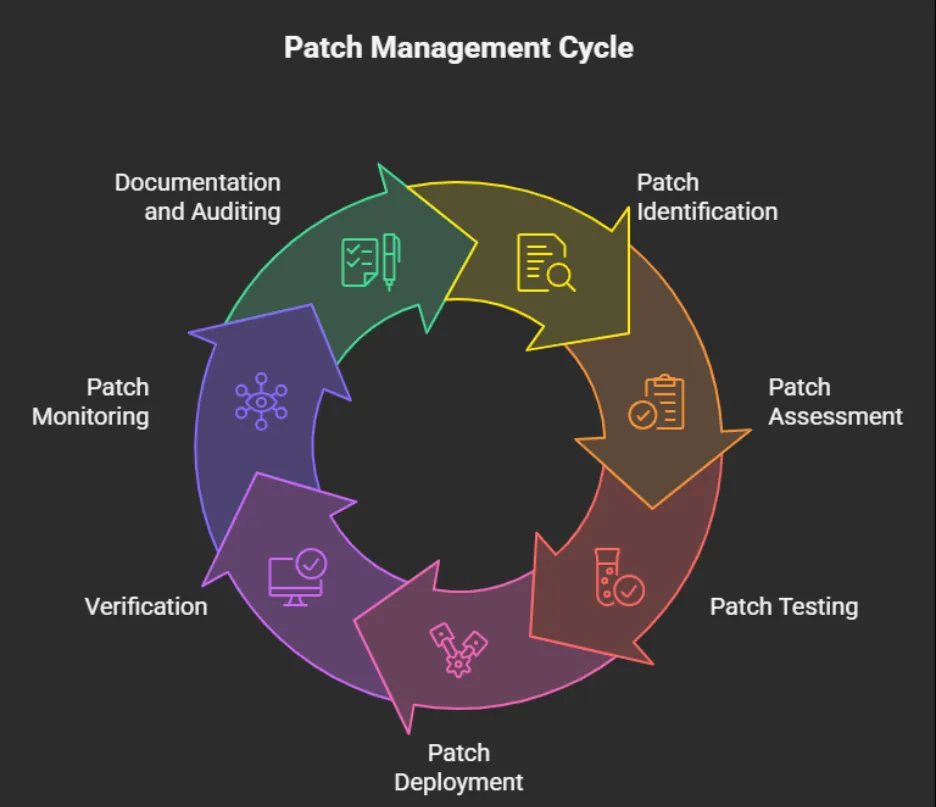
Patch identification
IT teams or automated tools identify newly released patches relevant to the organization’s hardware, operating systems, and applications. This step focuses on understanding what updates are available, which systems they impact, and the severity of the vulnerabilities they address.
Patch assessment
Once identified, patches are reviewed to determine their priority and potential effect on business operations. Teams assess factors such as exploit likelihood, system criticality, and any risks associated with applying the update, ensuring the most important patches are addressed first.
Patch testing
New patches are applied to a controlled, nonproduction environment to evaluate their effects before widespread deployment. By simulating real-world operating conditions, IT teams can verify the stability and functionality of the patch and the systems it affects to ensure the patch does not introduce unexpected issues such as system crashes, software incompatibilities, or degraded performance.
Patch deployment
After approval, patches are deployed across live systems. This may be done manually, via centralized tools, or through automated patching solutions that follow predefined schedules and risk-based policies to ensure timely updates.
Verification
IT teams then verify that patches were successfully installed and that systems are operating normally. This includes checking system logs, scanning for missing updates, and confirming that the targeted vulnerabilities have been properly remediated.
Patch monitoring
Continuous oversight ensures all systems remain compliant with patching policies and security standards. Teams track patch status, detect failures, and identify any devices that remain exposed or fall out of compliance. Many organizations rely on dashboards, alerts, and reports to support this stage.
Documentation and auditing
All patching activities are documented, including vulnerability details, test results, deployment timelines, and system health after updates. These records support audits, regulatory compliance, incident response, and continuous improvement of security practices.
Benefits of Patch Management
Patch management enables IT teams to safeguard devices and infrastructure while maintaining system reliability and performance. With automated and remote management capabilities, organizations also gain greater efficiency, consistency, and regulatory compliance.
Benefits include:
Automated operations:
Modern patch management tools automate update deployment, enforce security policies, and maintain compliance with minimal manual involvement. This reduces human error, lowers risk, and simplifies day-to-day IT operations.
Optimal user experiences:
Many patches introduce new features or performance improvements that enhance usability and streamline workflows, leading to better productivity across teams.
Improved risk management:
By quickly identifying and fixing high-priority vulnerabilities, organizations can significantly reduce exposure to security threats and operational failures.
Business continuity:
Keeping systems current minimizes disruptions, supporting seamless operations and reliable service performance.
Audit readiness and reporting:
Built-in reporting and documentation create clear, traceable records of patching activities, making it easier for auditors to verify that security and compliance requirements are being met.
Why is Patch Management Important?
Patch management is essential for protecting your organization’s IT environment from vulnerabilities and operational risks. It helps defend against cyber threats, safeguard critical data, and stay compliant with changing regulatory requirements.
Strengthened Security:
Attackers often target known, unpatched weaknesses. By applying updates regularly, organizations shrink their attack surface and prevent threats from exploiting system flaws.
System Stability & Uptime:
Outdated software is more likely to fail or perform poorly. Timely patching improves system stability, reduces crashes, and minimizes service interruptions that can impact business operations.
Regulatory Compliance:
Many frameworks and regulations, including GDPR, HIPAA, and PCI DSS, mandate timely vulnerability remediation. A structured patching process helps avoid penalties while reinforcing customer and stakeholder confidence.
Optimized Performance & Features:
Patches are not limited to security fixes. They frequently introduce performance improvements and new features that help systems operate more efficiently and stay technologically current.
Cost Savings:
The financial impact of breaches and downtime can be severe. Effective patch management reduces the likelihood of these incidents, leading to long-term savings and fewer emergency recovery efforts.
Patch management vs. vulnerability management
Patch management is a core component of any vulnerability management strategy, but the two are not the same. Having a structured patching process does not mean automatically applying every available fix without consideration.
When a vulnerability is discovered, organizations typically have three possible responses:
- Apply a patch, if one exists, to fully remediate the issue.
- Use compensating controls to reduce risk without directly patching, often when a fix is not yet available or cannot be applied immediately. This approach helps limit exposure while buying time for permanent remediation.
- Accept the risk, choosing not to take action when the impact is low or remediation is impractical.
While each organization must decide what is appropriate for its specific context, applying patches remains the preferred long-term solution whenever feasible.
Although the terms “patch management” and “vulnerability management” are often used interchangeably, they represent different levels of scope. Patch management focuses specifically on deploying software updates, making it a narrower, more tactical process.
Risks of not implementing patch management
Looking at the benefits of patch management also makes the risks of ignoring it very clear. Without a structured patching process, organizations expose themselves to multiple operational and security threats, including:
- Your company is vulnerable to cyberattacks because hackers may readily exploit any discovered flaw.
- The cost of lost productivity and recovery outweighs the expense of deploying an automated patch management solution
- Your competitors are moving forward, putting you behind with an outdated system and attempting to tackle issues caused by late patching.
- Loss of credibility
- Failure to comply might result in a fine.
The emergence of cyber hazards is uncontrollable. However, you can control and manage your organization's weaknesses effectively. One of the causes of the greatest cyber-attacks to date has been poor patch management, which is critical to achieving effective organizational security.
Loginsoft Perspective
At Loginsoft, we understand how crucial timely patching is to minimizing risk. Our approach focuses on helping organizations improve visibility, automate patch cycles, and streamline remediation workflows. We assist security and IT teams in identifying high risk vulnerabilities, determining which patches matter most, and reducing delays between detection and deployment.
By integrating threat intelligence, vulnerability insights, and continuous monitoring, Loginsoft helps businesses close gaps before attackers exploit them. Our goal is to support teams with the right tools, processes, and expertise to maintain a secure and resilient patch management program.
FAQs
Q1. What is Patch Management?
Patch Management is the systematic process of identifying, prioritizing, testing, and deploying software updates to fix vulnerabilities and improve system performance.
Q2. Why is Patch Management important?
It prevents attackers from exploiting known vulnerabilities and helps organizations maintain strong cyber hygiene and compliance.
Q3. How often should organizations patch systems?
Most organizations follow a monthly patch cycle but apply critical patches immediately when active exploits are detected.
Q4. What does a patch fix?
Patches can fix security vulnerabilities, bugs, performance issues, or introduce new features.
Q5. How does Loginsoft support Patch Management?
Loginsoft helps organizations identify high risk vulnerabilities, streamline patching workflows, and integrate intelligence driven prioritization for faster remediation.
Explore the key security, speed, and performance differences between TLS 1.3 and TLS 1.2


