
Data Exfiltration in Cybersecurity
What Is Data Exfiltration
Data exfiltration refers to the unauthorized removal, transfer, or extraction of data from a device, system, or network. It typically occurs when cybercriminals steal sensitive information from personal or organizational assets such as computers, servers, mobile devices, or cloud environments.
Also commonly described as data theft, data leakage, data exportation, or data extrusion, exfiltration poses serious risks to organizations. Poor information security controls can lead to data loss that results in financial damage, regulatory penalties, and long-term reputational harm.
How Does Data Exfiltration Occur?
Data exfiltration usually stems from one of three sources, External Attacks, Accidental Insider Threats and Malicious Insider Threats
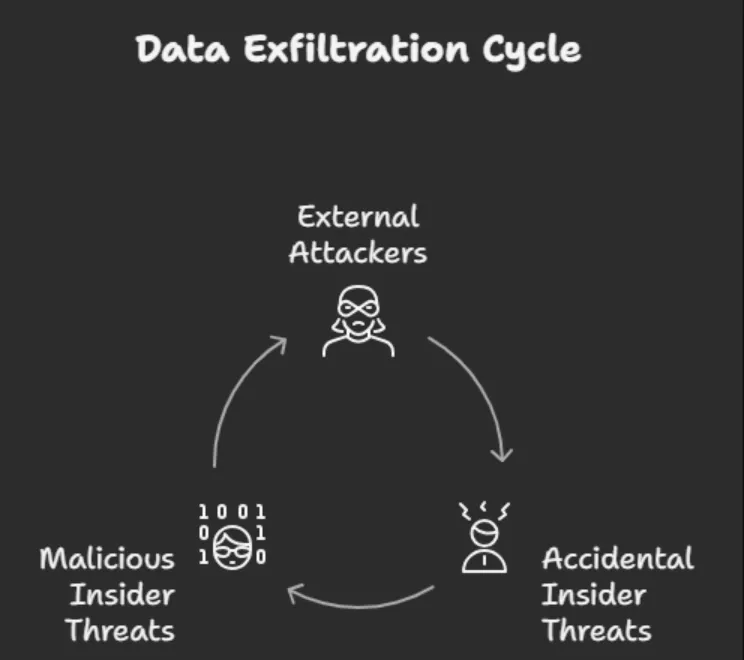
External Attackers
This includes hackers, cybercriminal groups, nation-state actors, or other malicious outsiders who breach systems to steal sensitive data.
Accidental Insider Threats
Authorized users, such as employees, contractors, or partners, may unintentionally expose data through mistakes, poor security awareness, or falling victim to phishing scams. Examples include copying sensitive data to unsecured USB drives or personal storage devices.
Malicious Insider Threats
In less common cases, trusted individuals with legitimate access intentionally steal data. This may involve disgruntled employees or insiders acting for financial gain or revenge.
Types of Data Exfiltration
Research shows that data exfiltration commonly occurs through the following channels:
- Databases
- Network traffic
- File-sharing systems
- Corporate email platforms
- Malware-based attacks
- Cloud applications and cloud databases
Data Exfiltration vs Data Leakage vs Data Breach
Although often confused, these terms describe different security incidents:
Preventing Data Exfiltration
Detecting data exfiltration is challenging due to encrypted traffic, subtle indicators of compromise, and insider activity. However, organizations can significantly reduce risk by implementing layered defenses.
Key prevention strategies include:
- Enforcing strong access controls and authentication
- Continuously monitoring and analyzing network traffic
- Encrypting sensitive data at rest and in transit
- Deploying data loss prevention (DLP) solutions
- Using intrusion detection and prevention systems (IDPS)
- Conducting regular vulnerability assessments and penetration testing
- Applying security patches promptly
- Establishing and enforcing clear security policies
- Training employees in security awareness and best practices
- Implementing endpoint detection and response (EDR) tools
Data Exfiltration in Modern Cybersecurity
As organizations adopt cloud services and remote work, data exfiltration techniques continue to evolve. Attackers increasingly use trusted services and encrypted channels to evade detection.
Modern cybersecurity strategies must focus on monitoring data behavior, not just perimeter defenses.
Loginsoft Perspective
At Loginsoft, Data Exfiltration is treated as a high-impact threat that often signals a successful breach. Through our Threat Intelligence, Vulnerability Intelligence, and Security Engineering Services, we help organizations detect and disrupt exfiltration activity.
Loginsoft supports data exfiltration defense by
- Tracking exfiltration techniques and tools
- Enriching detections with threat intelligence
- Identifying abnormal data movement
- Supporting rapid containment and response
- Reducing exposure through risk-based controls
Our intelligence-led approach helps organizations protect their most valuable data.
FAQs
Q1. What is data exfiltration?
Data exfiltration is the unauthorized transfer of sensitive data outside an organization.
Q2. How does data exfiltration occur?
Through malware, compromised accounts, insider threats, or exploited vulnerabilities.
Q3. Is data exfiltration the same as a data breach?
Data exfiltration is often part of a data breach but focuses specifically on data theft.
Q4. How can organizations detect data exfiltration?
By monitoring network traffic, user behavior, and data movement patterns.
Q5. How does Loginsoft help prevent data exfiltration?
Loginsoft uses threat intelligence and behavioral analysis to detect and disrupt exfiltration activity.
Explore the key security, speed, and performance differences between TLS 1.3 and TLS 1.2


